Accreditation & Certification
Cognia Accreditation and Certification are like no others. Our research-based performance standards give your teams a shared framework to achieve measurable, meaningful improvement. No other accrediting agency gives you actionable data from professional evaluators who are experienced educators—or continues to guide you to leverage your strengths for improvement. Get more for your efforts and proudly display a seal of educational quality that is recognized worldwide.
The pursuit of excellence
The premier diagnostic tool for school improvement
For more than 125 years, schools have been inviting Cognia and our legacy agencies, NCA CASI, NWAC, and SACS CASI, into their classrooms. Why? Because we go beyond evaluating school quality. We provide trusted expertise and actionable ideas that move the needle on school quality.
Accreditation is the launchpad for school improvement. Based on rigorous research-based standards and evidence-based criteria, the process probes the whole institution—from policies to learning conditions and cultural context—to determine how well the parts work together to meet the needs of every learner.
Accreditation isn’t about passing a one-time inspection—it helps education providers meet improvement goals and sustain commitments to better learner outcomes.
The institution types we service include:
- Charter and charter school authorizers
- Digital learning
- Early learning
- Educational service agency
- Non-public including Catholic schools, dioceses, and other faith-based affiliates
- Postsecondary
- School
- Special purpose
- Systems
Cognia Performance Standards are at the heart of continuous improvement and accreditation. They define the characteristics of a good education institution and provide guidelines for efforts that will energetically and visibly grow learners, teachers, leaders, and organizations.
Every six years, we complete a development cycle to examine and update the Cognia Performance Standards. The current Cognia Performance Standards, which went into effect on July 1, 2022, apply to all K–12 and postsecondary institutions. Early Learning and Extended Learning have separate standards.
More insight, more collaboration
The current accreditation protocol is six years for most institutions. The six-year accreditation term adds more time for institutions to identify, implement, and evaluate improvement activities; and additional touchpoints throughout the term will provide more support from Cognia.
Institutions new to Cognia begin with familiarizing themselves with Cognia and the accreditation process. All institutions engage in the three main phases of accreditation: Self-Assessment, Engagement, and Progress.
Essential to accreditation, as well as certification processes, is the Engagement Review—an in-depth exploration of your institution that uses your own evidence, plus stakeholder input and expert analysis, to identify noteworthy practices and next steps for improvements.
You get guidance and support from dedicated Cognia experts through all the phases and activities.

Preparation and Self-Assessment: Your process begins with team orientation and training from Cognia. Then your team begins to reflect and collaborate; you’ll identify and collect the evidence that most meaningfully demonstrates your strengths and challenges.

Cognia-led Engagement Review: Your Cognia evaluator then reviews your evidence and data, and analyzes all input against the Cognia Performance Standards and Rubrics.

Engagement Review Report: The Cognia evaluator will synthesize all the input, identify patterns of strength, and recommend how to apply your institution’s strengths to improve, discussing all the conclusions with you.

Approval: Cognia’s Global Commission confirms that the findings in the report demonstrate your institution’s commitment and quality and confers your accreditation.

Progress: This phase is a scheduled follow-up for your institution to assess the status of your continuous improvement efforts and get continued collaboration and guidance from your Cognia evaluator, helping you sustain momentum toward your goals.
Get an infographic for a visualization of the above process.
To qualify for accreditation, education providers must follow Cognia’s accreditation policies.
See examples of educational practices that are aligned with Cognia Performance Standards.
The Global Commission
Recognizing innovation
Cognia’s STEM Certification guides leaders with a specific framework and improvement process, culminating in recognition for programs that demonstrate a strong and effective STEM focus. If your institution seeks STEM Certification, you will host a STEM Certification Review simultaneously with your Accreditation Engagement Review. The STEM Certification Review is conducted by experienced educators, including specialists in the STEM disciplines.
STEM Certification from Cognia empowers your early learning, K–12, and postsecondary institutions to:
- Convey to parents and staff your commitment to high-quality STEM education
- Build awareness in your community and increase expectations for STEM education
- Encourage enrollment with a unique differentiator
The evaluators look for hallmarks of quality as described in Cognia’s STEM Certification Standards. These standards, which Cognia identified through robust research and extensive observations, focus on characteristics like problem-based experiential learning and the integration of STEM thinking into a broad range of activities and learning opportunities.
Unlock the power of STEM
Dr. Dil Uswatte, Rocky Ridge Elementary (AL), and Patrick Burton, Mercy Academy (KY), believe STEM is a recipe for student success, not just an ingredient. Cognia’s STEM Certification framework contributes to this success.
The Standards
In the news
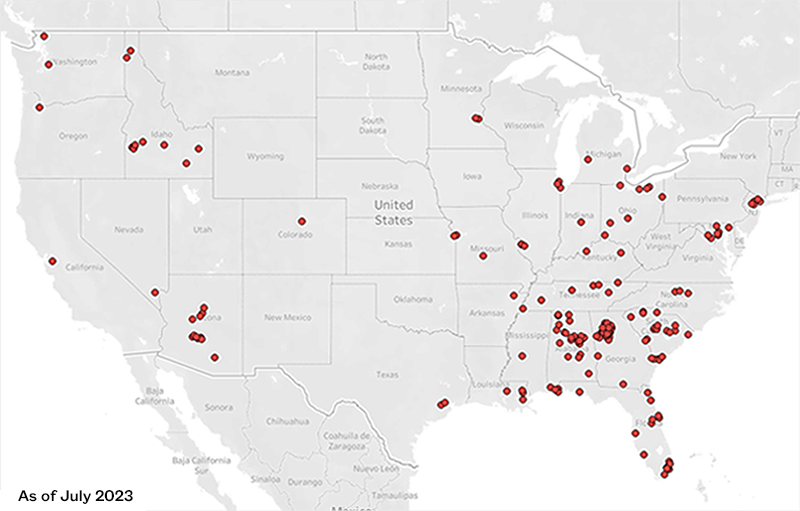
Serving more than 400 institutions in the US and around the globe
Recognizing individual mastery
Cognia’s Competency-based Education (CBE) Certification provides the framework for designing and successfully implementing competency-based education in a school or school system. Working in collaboration with the Aurora Institute’s CompetencyWorks initiative, the world’s leading research organization for competency-based education, Cognia has developed CBE Standards that provide an opportunity for self-evaluation and recognition by Cognia, the world’s largest education improvement agency.
Cognia recognizes that interest in the CBE movement is growing rapidly across the United States and around the world. Cognia’s CBE Standards and certification process can ensure that schools and school systems can effectively embed the key elements of CBE. Cognia’s CBE certification empowers your schools to:
- Demonstrate commitment to a unique learning plan for all students
- Recruit teachers and learners who are committed to the concepts of CBE
- Demonstrate to your community your pledge to cutting-edge education practices
The Standards
Resources to guide you
-
Accreditation -
The premier diagnostic tool for school improvement
For more than 125 years, schools have been inviting Cognia and our legacy agencies, NCA CASI, NWAC, and SACS CASI, into their classrooms. Why? Because we go beyond evaluating school quality. We provide trusted expertise and actionable ideas that move the needle on school quality.
Accreditation is the launchpad for school improvement. Based on rigorous research-based standards and evidence-based criteria, the process probes the whole institution—from policies to learning conditions and cultural context—to determine how well the parts work together to meet the needs of every learner.
Accreditation isn’t about passing a one-time inspection—it helps education providers meet improvement goals and sustain commitments to better learner outcomes.
The institution types we service include:
- Charter and charter school authorizers
- Digital learning
- Early learning
- Educational service agency
- Non-public including Catholic schools, dioceses, and other faith-based affiliates
- Postsecondary
- School
- Special purpose
- Systems
Cognia Performance Standards are at the heart of continuous improvement and accreditation. They define the characteristics of a good education institution and provide guidelines for efforts that will energetically and visibly grow learners, teachers, leaders, and organizations.
Every six years, we complete a development cycle to examine and update the Cognia Performance Standards. The current Cognia Performance Standards, which went into effect on July 1, 2022, apply to all K–12 and postsecondary institutions. Early Learning and Extended Learning have separate standards.
More insight, more collaboration
The current accreditation protocol is six years for most institutions. The six-year accreditation term adds more time for institutions to identify, implement, and evaluate improvement activities; and additional touchpoints throughout the term will provide more support from Cognia.
Institutions new to Cognia begin with familiarizing themselves with Cognia and the accreditation process. All institutions engage in the three main phases of accreditation: Self-Assessment, Engagement, and Progress.
Essential to accreditation, as well as certification processes, is the Engagement Review—an in-depth exploration of your institution that uses your own evidence, plus stakeholder input and expert analysis, to identify noteworthy practices and next steps for improvements.
You get guidance and support from dedicated Cognia experts through all the phases and activities.
Preparation and Self-Assessment: Your process begins with team orientation and training from Cognia. Then your team begins to reflect and collaborate; you’ll identify and collect the evidence that most meaningfully demonstrates your strengths and challenges.
Cognia-led Engagement Review: Your Cognia evaluator then reviews your evidence and data, and analyzes all input against the Cognia Performance Standards and Rubrics.
Engagement Review Report: The Cognia evaluator will synthesize all the input, identify patterns of strength, and recommend how to apply your institution’s strengths to improve, discussing all the conclusions with you.
Approval: Cognia’s Global Commission confirms that the findings in the report demonstrate your institution’s commitment and quality and confers your accreditation.
Progress: This phase is a scheduled follow-up for your institution to assess the status of your continuous improvement efforts and get continued collaboration and guidance from your Cognia evaluator, helping you sustain momentum toward your goals.Get an infographic for a visualization of the above process.
To qualify for accreditation, education providers must follow Cognia’s accreditation policies.
See examples of educational practices that are aligned with Cognia Performance Standards.
The Global Commission
The Cognia Global Commission grants accreditation and certification for all institutions and systems within their authority. Read about the commission board members and their respective areas of expertise. -
STEM Certification -
Recognizing innovation
Cognia’s STEM Certification guides leaders with a specific framework and improvement process, culminating in recognition for programs that demonstrate a strong and effective STEM focus. If your institution seeks STEM Certification, you will host a STEM Certification Review simultaneously with your Accreditation Engagement Review. The STEM Certification Review is conducted by experienced educators, including specialists in the STEM disciplines.
STEM Certification from Cognia empowers your early learning, K–12, and postsecondary institutions to:
- Convey to parents and staff your commitment to high-quality STEM education
- Build awareness in your community and increase expectations for STEM education
- Encourage enrollment with a unique differentiator
The evaluators look for hallmarks of quality as described in Cognia’s STEM Certification Standards. These standards, which Cognia identified through robust research and extensive observations, focus on characteristics like problem-based experiential learning and the integration of STEM thinking into a broad range of activities and learning opportunities.
Unlock the power of STEM
Dr. Dil Uswatte, Rocky Ridge Elementary (AL), and Patrick Burton, Mercy Academy (KY), believe STEM is a recipe for student success, not just an ingredient. Cognia’s STEM Certification framework contributes to this success.
The Standards
In the news
Serving more than 400 institutions in the US and around the globe
-
Competency-based Education Certification -
Recognizing individual mastery
Cognia’s Competency-based Education (CBE) Certification provides the framework for designing and successfully implementing competency-based education in a school or school system. Working in collaboration with the Aurora Institute’s CompetencyWorks initiative, the world’s leading research organization for competency-based education, Cognia has developed CBE Standards that provide an opportunity for self-evaluation and recognition by Cognia, the world’s largest education improvement agency.
Cognia recognizes that interest in the CBE movement is growing rapidly across the United States and around the world. Cognia’s CBE Standards and certification process can ensure that schools and school systems can effectively embed the key elements of CBE. Cognia’s CBE certification empowers your schools to:
- Demonstrate commitment to a unique learning plan for all students
- Recruit teachers and learners who are committed to the concepts of CBE
- Demonstrate to your community your pledge to cutting-edge education practices
The Standards
Resources to guide you
Start your journey
Accreditation and certification begin with membership. When you become a member of the Cognia Global Network, expert evaluators will guide you through our accreditation process. You’ll enjoy personalized support from our team of experienced educators throughout your accreditation and continuous improvement journey. Cognia also offers a suite of tools and resources that help with team collaboration, data measurement and collection, and decision-making—all critical components of the accreditation process. Plus, the Cognia Learning Community, our online professional development platform, supports your professional development efforts through a wide variety of learning labs and community spaces designed for teachers and leaders.
Accreditation and certification are accomplishments worth sharing, to let your community know that your institution upholds high standards of education quality. Schools and systems that further stand out—as demonstrated through their Engagement Reviews—are designated Cognia Schools and Systems of Distinction for the year of their accreditation.
Learn, grow, and improve.
Cognia membership brings together comprehensive resources you need to accelerate improvement.
Earn your mark of excellence.
Be inspired by success stories from our members
Systems and schools use Cognia accreditation and certification to support continuous school improvement efforts.




Training and tools to support accreditation and certification
When you embark in the accreditation process, you will participate in required training that sets you up for a successful Engagement Review. And, we support you with unmatched online tools that measure key factors such as student quality and engagement, yielding essential data.
Observation Tools
Our observation tools measure learning impact so you can strengthen instructional practices. While participating in accreditation, Effective Learning Environments Observation Tool® (eleot®), Environmental Rating for Early Learning (erel™), or the Digital Learning Observation Tool will help identify your improvement focus.
Surveys
Do you know whether your efforts at engagement and outreach are hitting the mark? Use our surveys for students, teachers, families, and community members to find out.
Engagement Review training—prepare on your schedule
Whether you will be the facilitator leading your own institution in training on the Cognia standards and protocols or are attending training with your school, ongoing events are available to support you. Register for the self-paced asynchronous course.
Serving educators at every level
Education agency leaders
High-level leaders and their teams work with Cognia to set priorities, identify resources, and track progress of improvement efforts for their institutions. Cognia partners with you to design programs and services that fit your specific needs.
System and school leaders
Work with Cognia to achieve the recognition you deserve through accreditation and certification. Cognia addresses the unique requirements for education institutions in the U.S. and around the world:
- Global Ministries
- Large Agencies
- Systems and Districts
- Individual Schools
- Early Learning
- Digital Learning
- And More